Mineral Spring Discovered by Heman Hagenbaugh
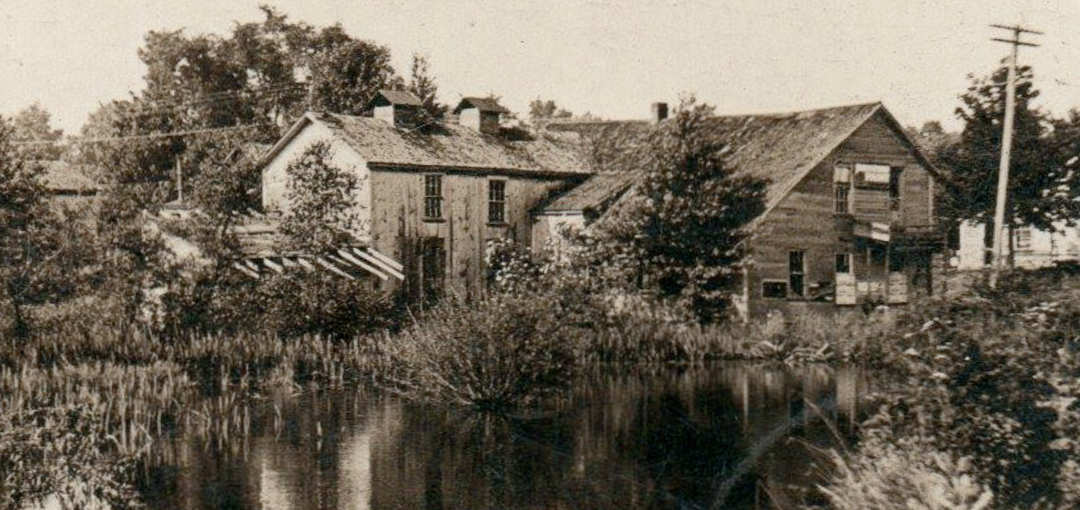
On Thursday, June 19, 1873 it was reported that Heman Hagenbaugh had discovered a mineral spring on his farm near Burr Oak, Michigan. The Detroit Advertiser and Tribune published the following details under the “Detroit and Vicinity” local news section:
BURR OAK
This quiet town has met with a sensation. A mineral spring has been discovered on the farm of Heman Hagenbaugh, near the village. An analysis of the water by Prof. Kedzie, of the Agricultural College, shows that it is among the class of healing waters. It contains in the imperial gallon:
Bi-carbonate Sodium … 1.8456 grains
[Bi-carbonate] Potassium … .2876 [grains]
[Bi-carbonate] Lime … 11.8533 [grains]
[Bi-carbonate] Magnesia … .5378 [grains]
[Bi-carbonate] Iron … .2314 [grains]
Chloride Potassium … .9259 [grains]
[Chloride] Sodium … 1.2962 [grains]
Sulphate Lime … .5551 [grains]
[Silica] … .4938 [grains]
Organic Matter … 2.1829 [grains]
Free Carbonic Acid Gas … 40.1121 cub. in.
The spring is visited by great numbers of people, and doubtless it will prove equal in healing qualities to any of these springs in the State elsewhere. The population of the village is increasing, owing to the excellent school and Church facilities enjoyed here. The new Presbyterian Church is especially attractive. Its pleasant audience room, with stained windows, comfortable seats, fine ornamentation, the genial pastor who officiates, and the heavy organ and most excellent choir, altogether bring together large and fashionable audiences.
Heman Hagenbuch was born on January 15, 1842 to Caleb C. Hagenbaugh (b. 1810) and Phebe Ann (Young) Hagenbaugh (b. 1814) in Sharon Township, Medina County, Ohio. His line is Andreas (b. 1715) > Michael (b. 1746) > Christian (b. 1770) > Caleb C. (b. 1810) > Heman (b. 1842). It should be noted that Heman, not Herman, is the correct spelling of his name. He was likely named after Heman the Ezrahite in the Old Testament. This Heman from the Bible was known for his music and wisdom. Heman Hagenbaugh’s parents may have hoped he would embody the same traits.
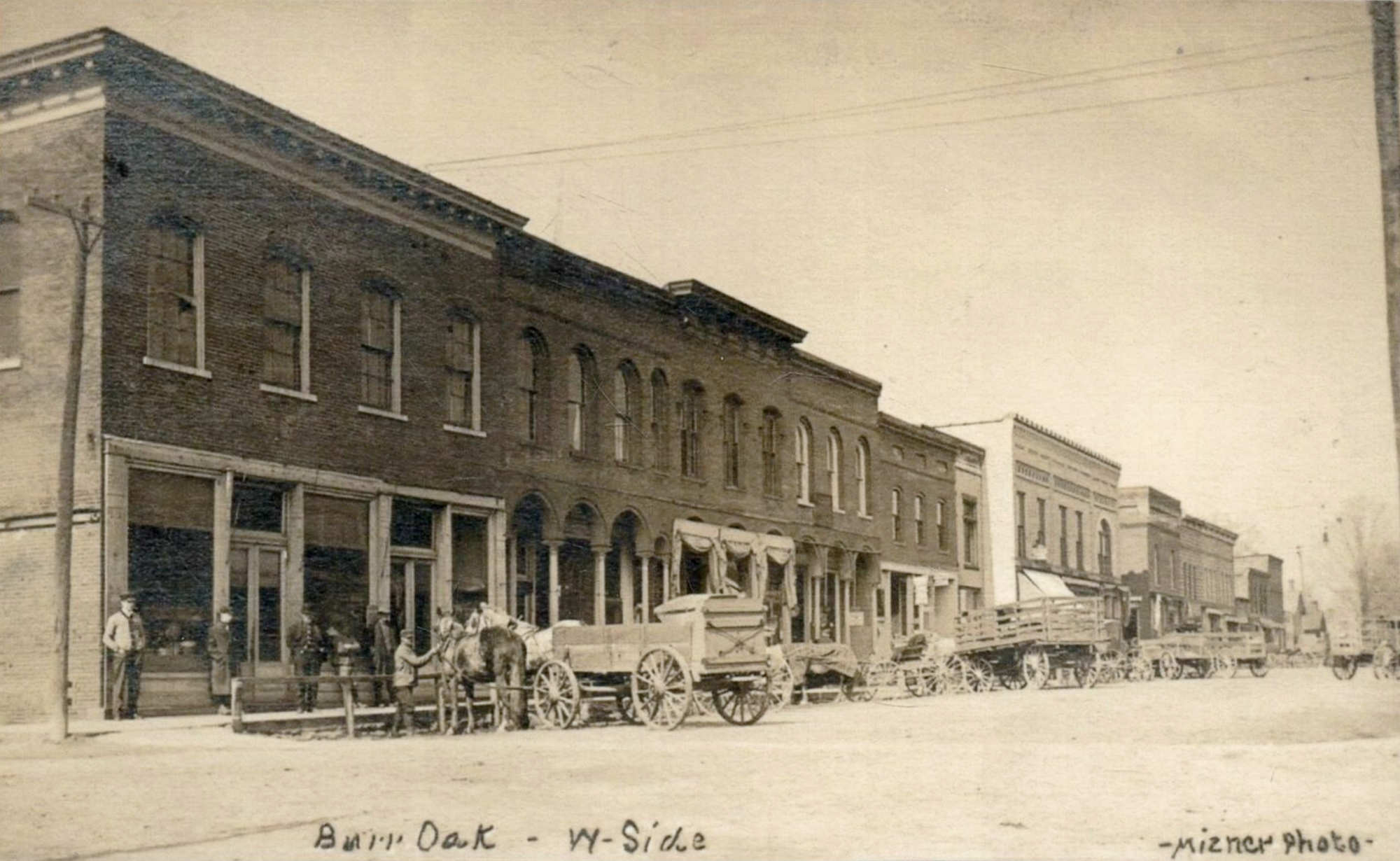
The town of Burr Oak, Michigan, c. 1900
His father, Caleb, was born in Albany Township, Berks County, Pennsylvania near the old Hagenbuch Homestead. By the mid-1800s, cheap farmland was increasingly scarce in Pennsylvania and around 1840 the family moved to Ohio—where Heman was born. In the 1850s, they moved once again, this time to Matteson Township, Branch County, Michigan.
As a young man, Heman attended school, but by 1860—when he was 18 years old—he was helping his father on the family farm. On July 1, 1863, he registered for the draft. It is unclear if he then joined the Union Army to fight in the American Civil War. On March 16, 1869, Heman married Sarah P. Lowery (b. 1841) of Matteson Township. They moved to Sherwood Township, Branch County, MI and Heman worked as a farmer according to the 1870 census.
The next year, the couple moved again—this time to the village of Burr Oak in St. Joseph County, MI. Here, the 1880 census recorded Heman and Sarah as raising two children: Edith (b. 1863) and Guy William (b. 1874). It should be noted that Edith’s birth year of 1863 predates Heman and Sarah marrying. This suggests that Edith was born out of wedlock and possibly to another father. Nevertheless, she became part of Heman and Sarah’s family during the 1870s.
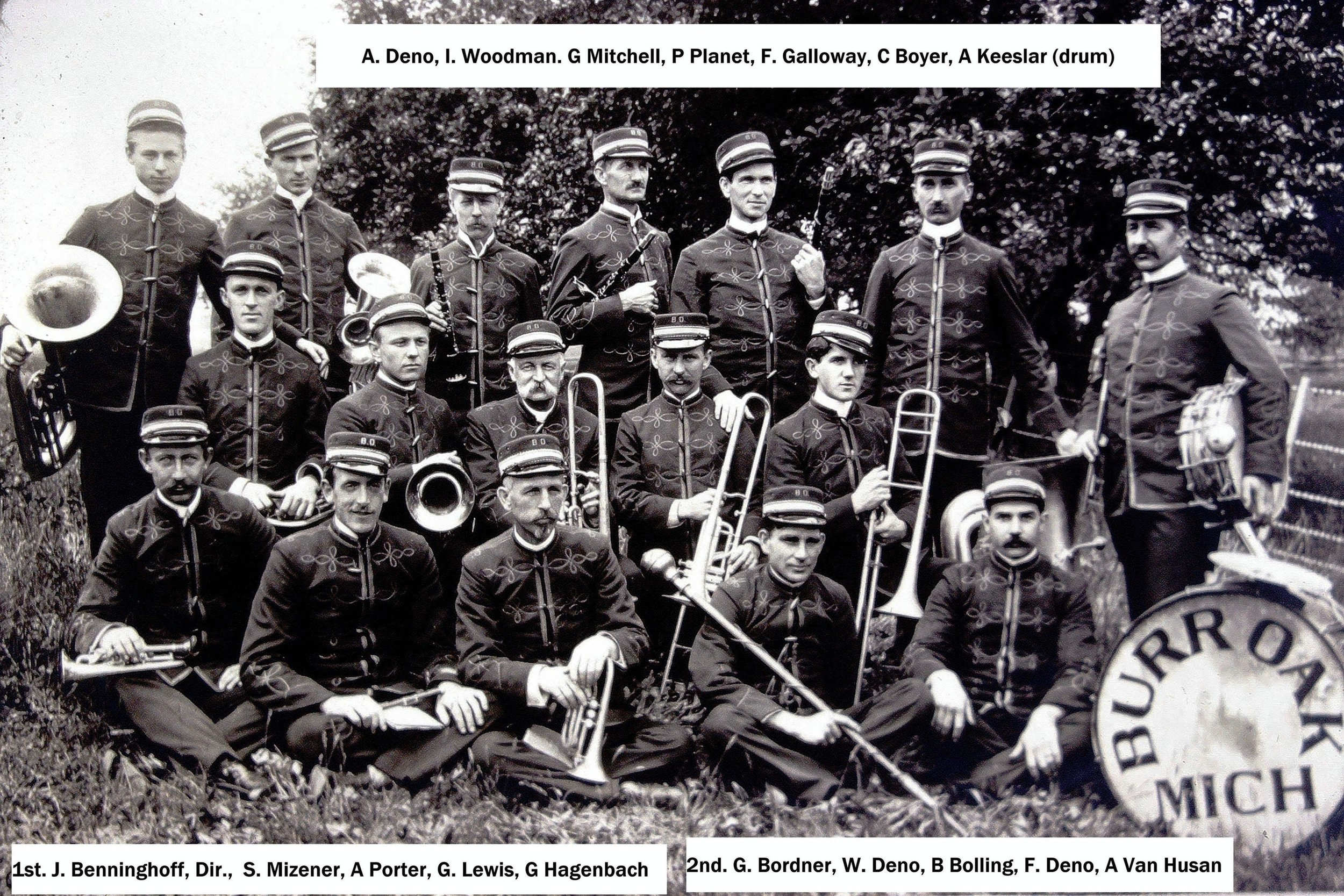
Burr Oak band, c. 1910. Guy W. Hagenbaugh is in the far right of the first row seated beside the bass drum. Credit: burroakhistory.com
In 1881, Edith married Loren William Richardson (b. 1857), and they had three children together: Fern L. Catherine (b. 1883), Ruby Dale (b. 1892), and Donald P. (1901). Guy William Hagenbaugh married Florence Jeanette Woodruff (b. 1874) in 1898 and they had two daughters: Mary F. (b. 1905) and Martha F. (b. 1912).
Property maps reveal that Heman Hagenbaugh owned 28 acres of land in the northwest corner of Burr Oak, near the Prairie River. This location appears to be where he discovered a mineral spring in 1873. From the Detroit Advertiser and Tribune article, it seems Heman had the water analyzed, attesting to its quality and suggesting that it was good for healing.
Mineral springs—naturally occurring sources of water full of dissolved minerals—have been popular destinations since antiquity. Many people believe drinking or bathing in mineral water can have curative powers. Some springs have the added feature of being near thermal hotpots, heating the water to a pleasant temperature. During the 19th century, many mineral springs in the United States grew into spa resorts, drawing tourists from far and wide to enjoy their healing waters. Other locations bottled their water to be sold in pharmacies.
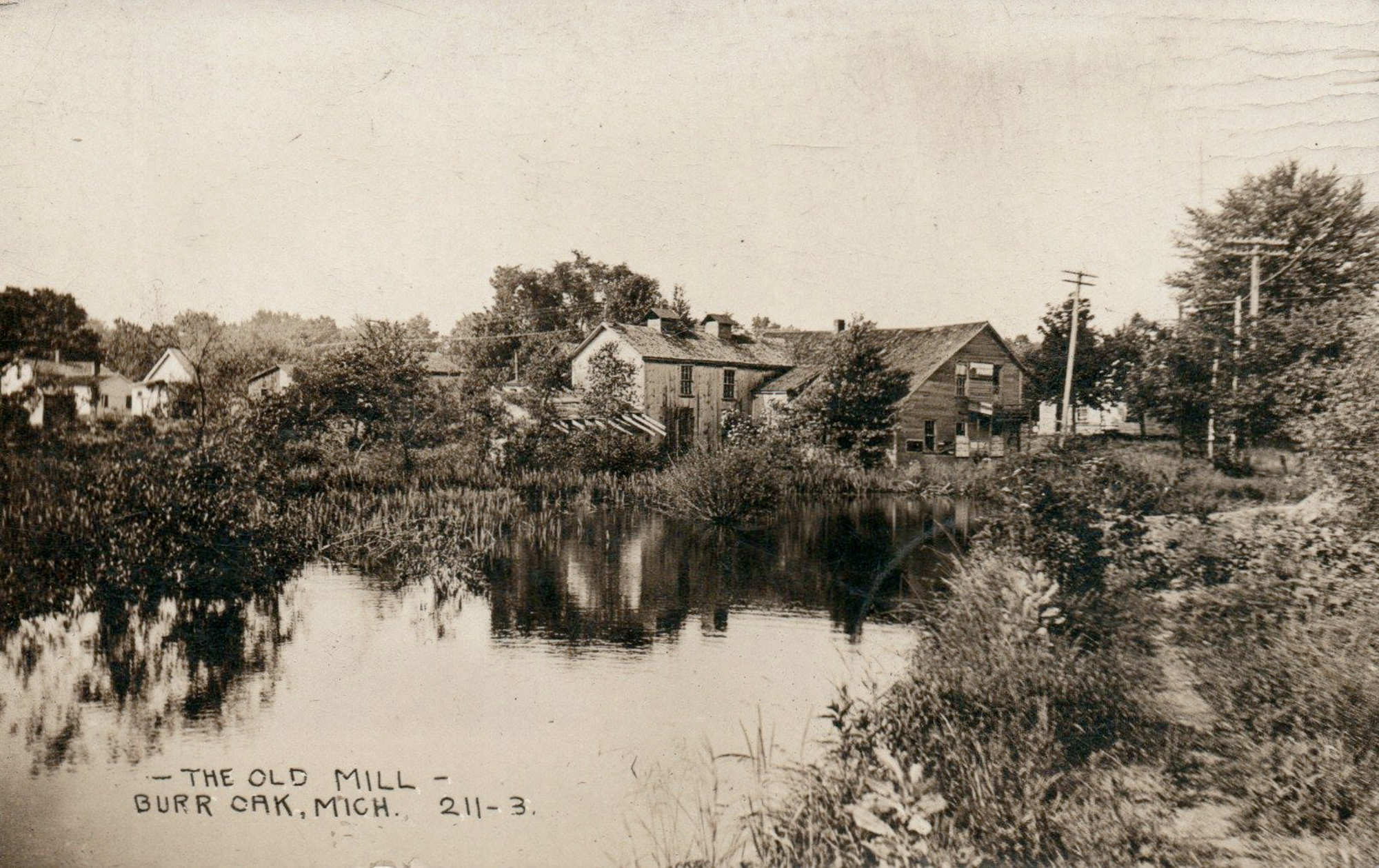
The Old Mill in Burr Oak, Michigan, c. 1910
After finding a mineral spring on his property, Heman may have hoped to put Burr Oak on the map as a tourist destination. The article in the Detroit Advertiser and Tribune points out the beneficial qualities of the spring water and the growth of the town. Unfortunately, it appears the venture failed since little else was written about Hagenbaugh’s mineral springs. It is possible, as happened with other small springs, that the source of the water quickly ran dry. According to the 1880s census, Heman found a job as a miller, probably at a mill along the Prairie River.
Heman Hagenbaugh died on February 19, 1908 and is buried in Burr Oak Township Cemetery in Burr Oak, MI. His wife, Sarah (Lowery) lived until 1924. She, along with her daughter, Edith (Richardson); granddaughter, Fern (Rowe); and great granddaughter, Eleanor, were all active in the suffragist movement. A picture published on January 4, 1916 in The Day Book for Chicago showed these four generations of Hagenbaugh women together.
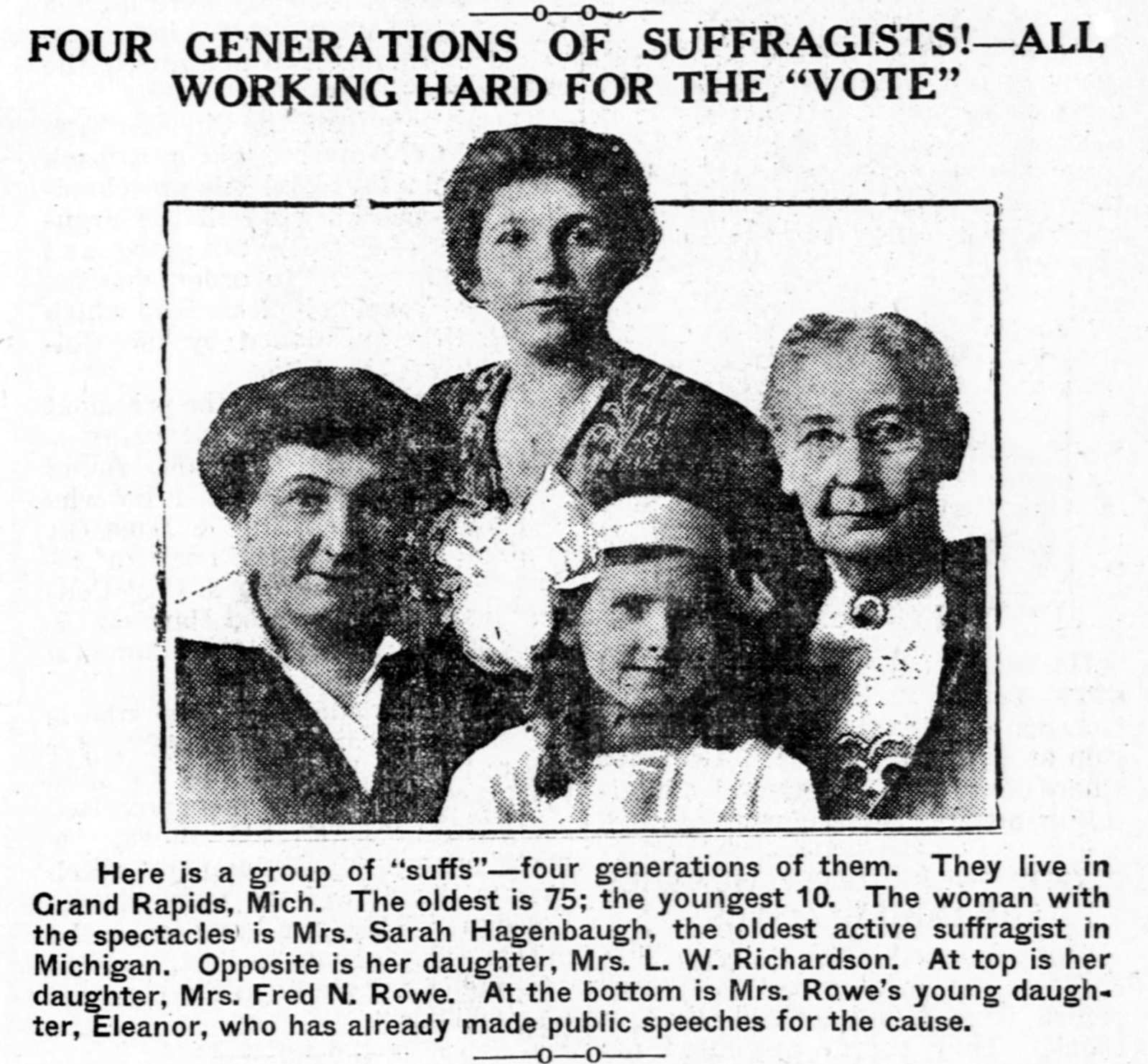
Four generations of Hagenbaugh women. From oldest to youngest: Sarah (Lowery) Hagenbaugh), Edith (Lowery/Hagenbaugh) Richardson, Fern (Richardson) Rowe, and Eleanor Rowe. Credit: “The Day Book”, January 4, 1916
Research shows that there are likely descendants of Heman and Sarah (Lowery) Hagenbaugh alive today. For example, Sarah’s granddaughter, Eleanor Rowe (b. 1905), married Roger Treat (b. 1905), and they had several children and numerous grandchildren. Some of these grandchildren may be living, although they would not have the Hagenbaugh name. Still, each could trace their lineage back to their Hagenbaugh ancestors and connect them to our Hagenbuch family tree.