Ode to the Glorious Groundhog
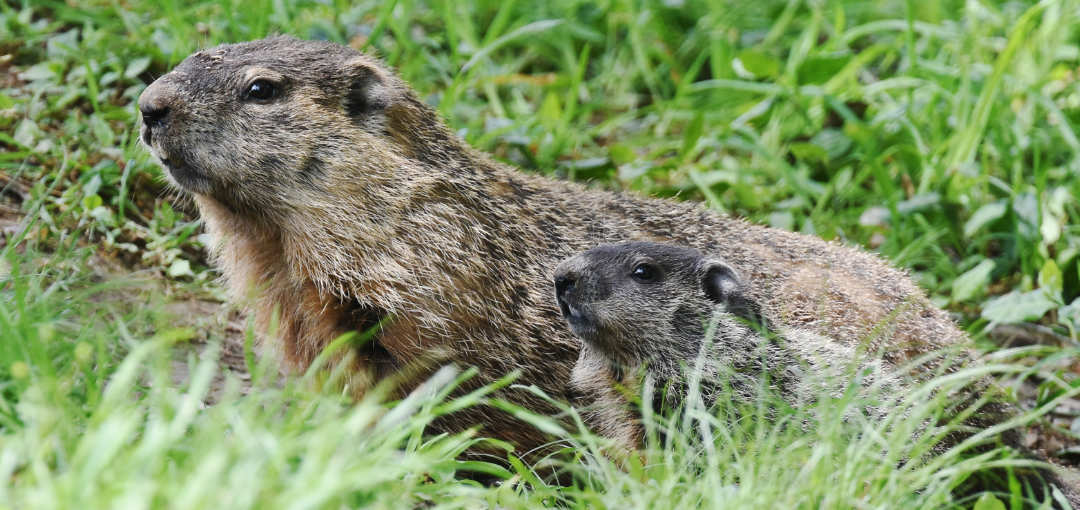
Groundhog, woodchuck, whistle pig, or land beaver—whatever you call it—this animal is an important part of American culture. The most obvious example of that is its role in Groundhog Day, which was celebrated yesterday.
Each February 2nd, thousands of spectators gather at dawn on Gobbler’s Knob in Punxsutawney, Pennsylvania to see a groundhog named “Phil” emerge from a stump. If Phil sees his shadow, so the tradition goes, there will be six more weeks of winter. If he does not, spring will arrive early. (Phil did see his shadow this year, unfortunately!) There are weather-predicting groundhogs throughout the United States with names like Buckeye Chuck, Malverne Mel, and Chuckles. However, Phil is the oldest and most well-known of the bunch.
My Hagenbuch family has always had a love-hate relationship with groundhogs. According to my baby book, when I was a few years old, I enjoyed telling people about “how Daddy ran over the groundhog” while driving. When I got older, I used to wander the fields near my parents’ house, looking for groundhogs in their burrows. My sisters and I would get excited if we saw a groundhog lumbering around the property, and for many years one lived by our pool and another in the bush by the front door.
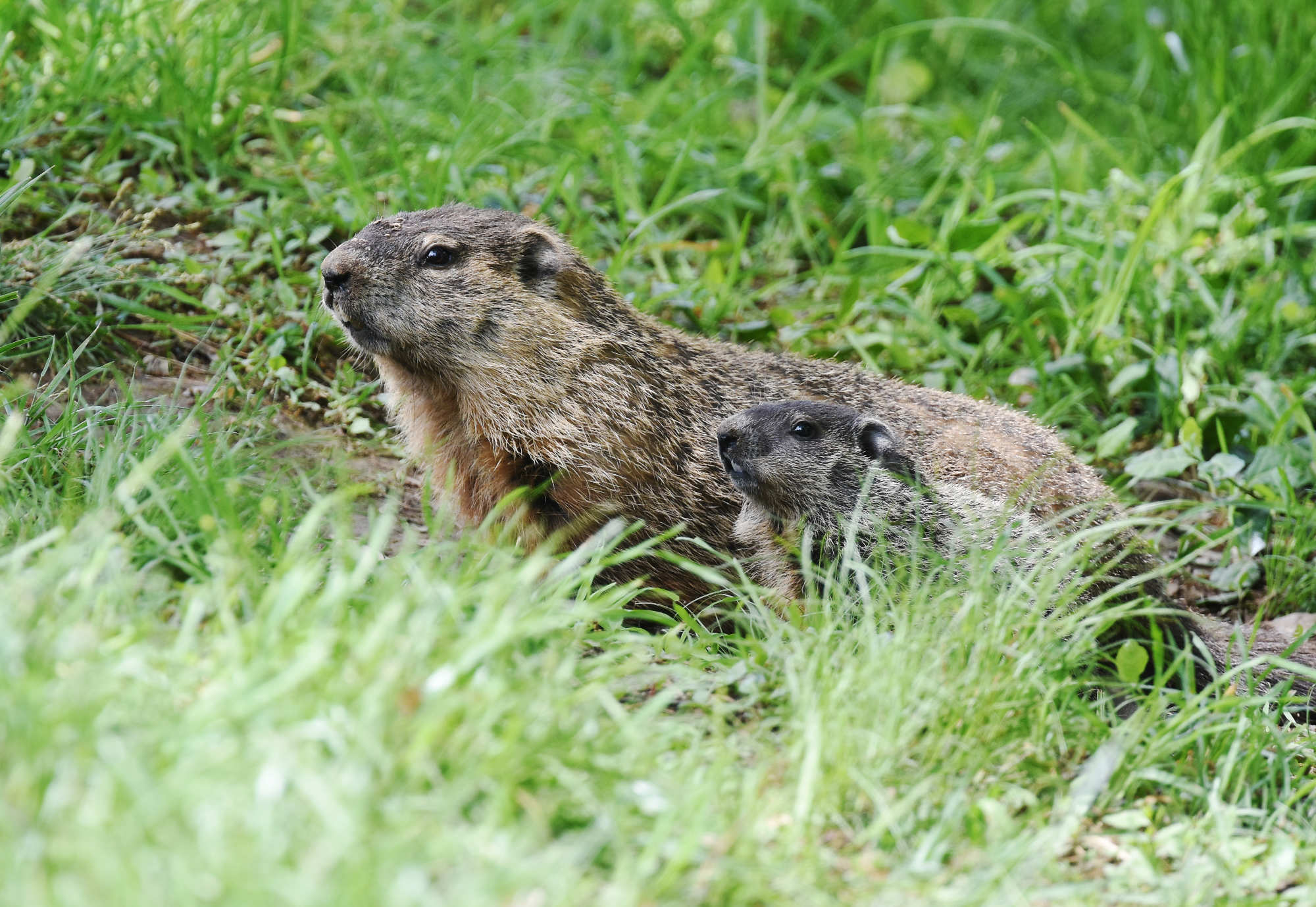
Groundhog mother and pup. Credit: Wikimedia.org/Andy Reago & Chrissy McClarren
But many people consider groundhogs to be a nuisance. When the first settlers arrived in North America, they learned of the groundhog from the native Algonquian speakers like the Lenape. In their language, the animal was called the wuchak, which was later Anglicized to woodchuck. That moniker eventually led to the creation of the “The Woodchuck Song” in 1902 for the musical The Runaways. The song’s silly lyrics, in turn, were the genesis of the popular tongue twister:
How much wood would a woodchuck chuck, if a woodchuck could chuck wood?
A woodchuck would chuck all the wood he could, if a woodchuck could chuck wood!
Farmers know that groundhogs have an affinity for digging burrows in cleared areas, making these difficult to plow and mow. Horses working in the fields and livestock grazing in pastures can step into the hole and become injured. Furthermore, groundhogs frequently dig under barn walls and foundations, destabilizing these structures. Most of all, these animals enjoy fresh produce. No garden is safe from their ravenous appetite for fruits and vegetables!
It’s no wonder that many farmers hunt or trap groundhogs. Growing up, we kept a .22 rifle on hand to keep the groundhogs out of the garden. In one particularly memorable incident, my mother, Linda (Gutshall) Hagenbuch, was on the phone when she saw a groundhog eating her cucumbers. She grabbed the .22, loaded it, and shot the groundhog—all while talking on the telephone!
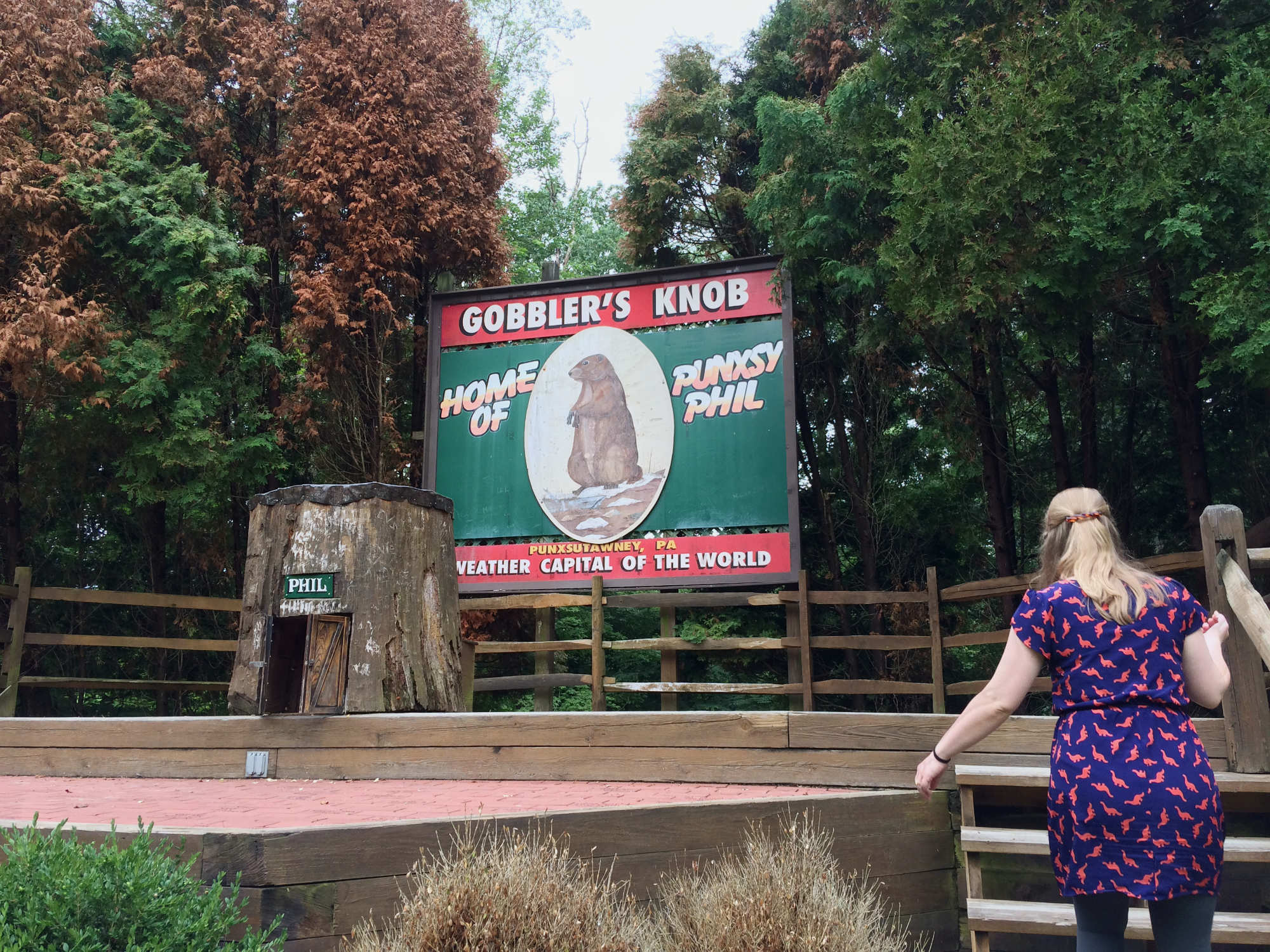
Sara (Mowery) Hagenbuch walks up to Phil’s stump at Gobbler’s Knob, 2019
In 2019, I visited Punxsutawney and Gobbler’s Knob. It was summertime, so there were no crowds. We walked right onto the stage where Phil emerges to contemplate the weather and looked into his stump. No one was home! We later learned that Phil lives at the local library most of the year. We drove over there and spied him tucked away, asleep in his enclosure.
Weather-predicting groundhogs have their roots with the Pennsylvania Deitsch. According to folklorist Dr. Don Yoder (b. 1921), February 2nd held significance for the German immigrants, who began arriving in Pennsylvania during the 1700s. On that day, the Christian holiday of Candlemas was observed, commemorating the presentation of Jesus at the Temple by his parents, Joseph and Mary. Candlemas, similar to other holidays like Christmas, replaced an older, pre-Christian celebration—Imbolc. Imbolc marked the half-way point between the beginning of winter and start of spring.
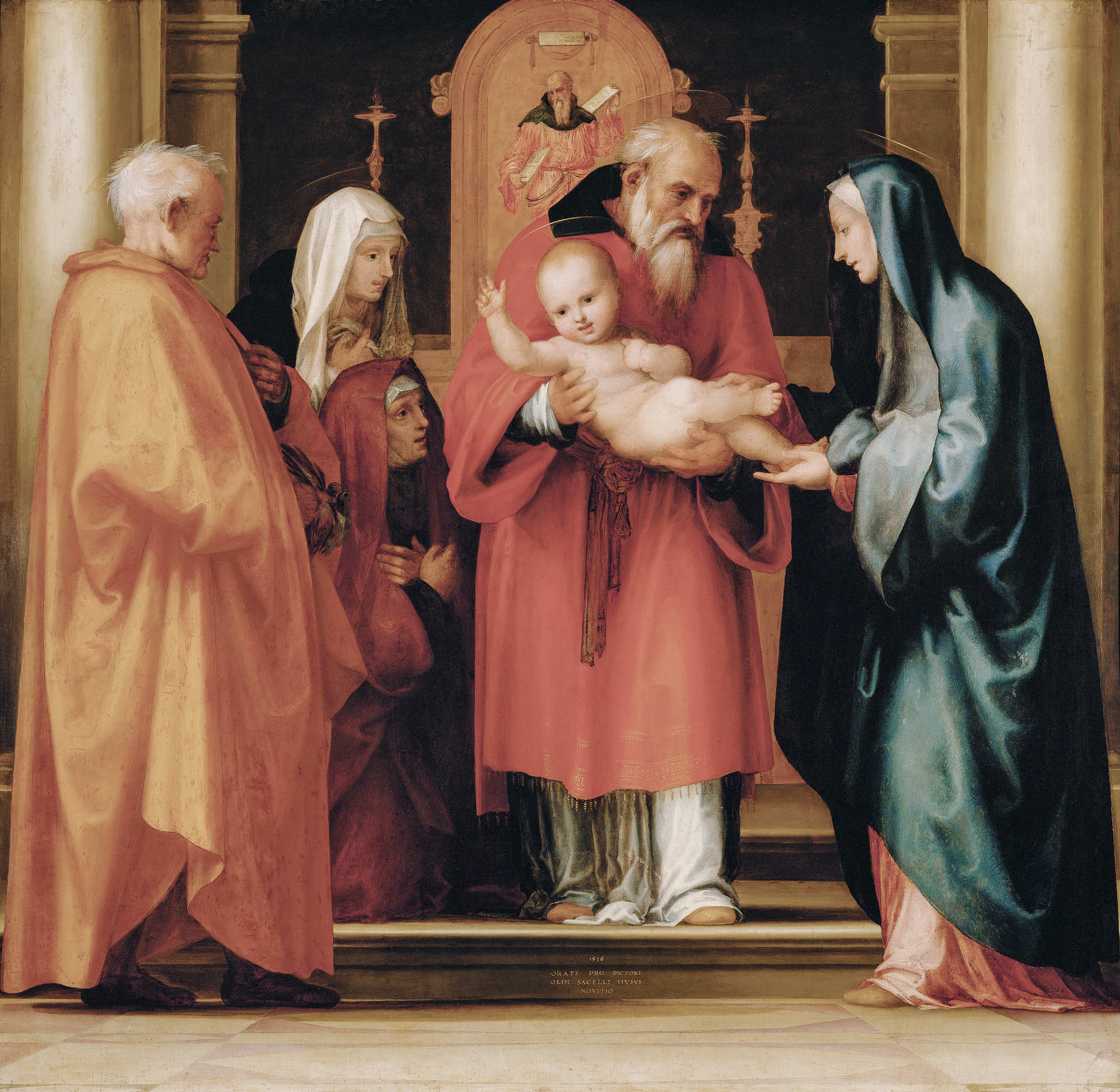
The Scene of Christ in the Temple painted by Fra Bartolomeo,1512
Yoder writes in his 2003 book Groundhog Day:
The Handwörterbuch des Deutschen Aberglaubens, or the Dictionary of German Folk Belief, has an article on Lichtmess, or Candlemas. “Above all,” it says, “Candlemas is decisive for the weather of the coming time, and with it also for the fruitfulness of the year.” [. . .] This European encyclopedia also cites the Dachs, or badger, as the Candlemas weather prophet throughout much of German-speaking Europe. . . Dachstag, or Badger Day, is a German folk expression for Candlemas. The belief was [. . .] if the badger encountered sunshine on Candlemas and therefore saw his shadow, he crawled back into his hole to stay for four more weeks, which would be a continuation of winter weather.
Badgers are rarely seen in Pennsylvania, unlike groundhogs which are commonly seen in the state’s forests and fields. As a result, the Deitsch adopted the groundhog as their weather-predicting animal. During his research, Yoder found that as early as February 2, 1840 Pennsylvania’s German speakers were using groundhogs to forecast the arrival of spring. According to one diary entry:
[On this day] Germans say the groundhog comes out of his winter quarters and if he sees his shadow he returns in and remains there 40 days.
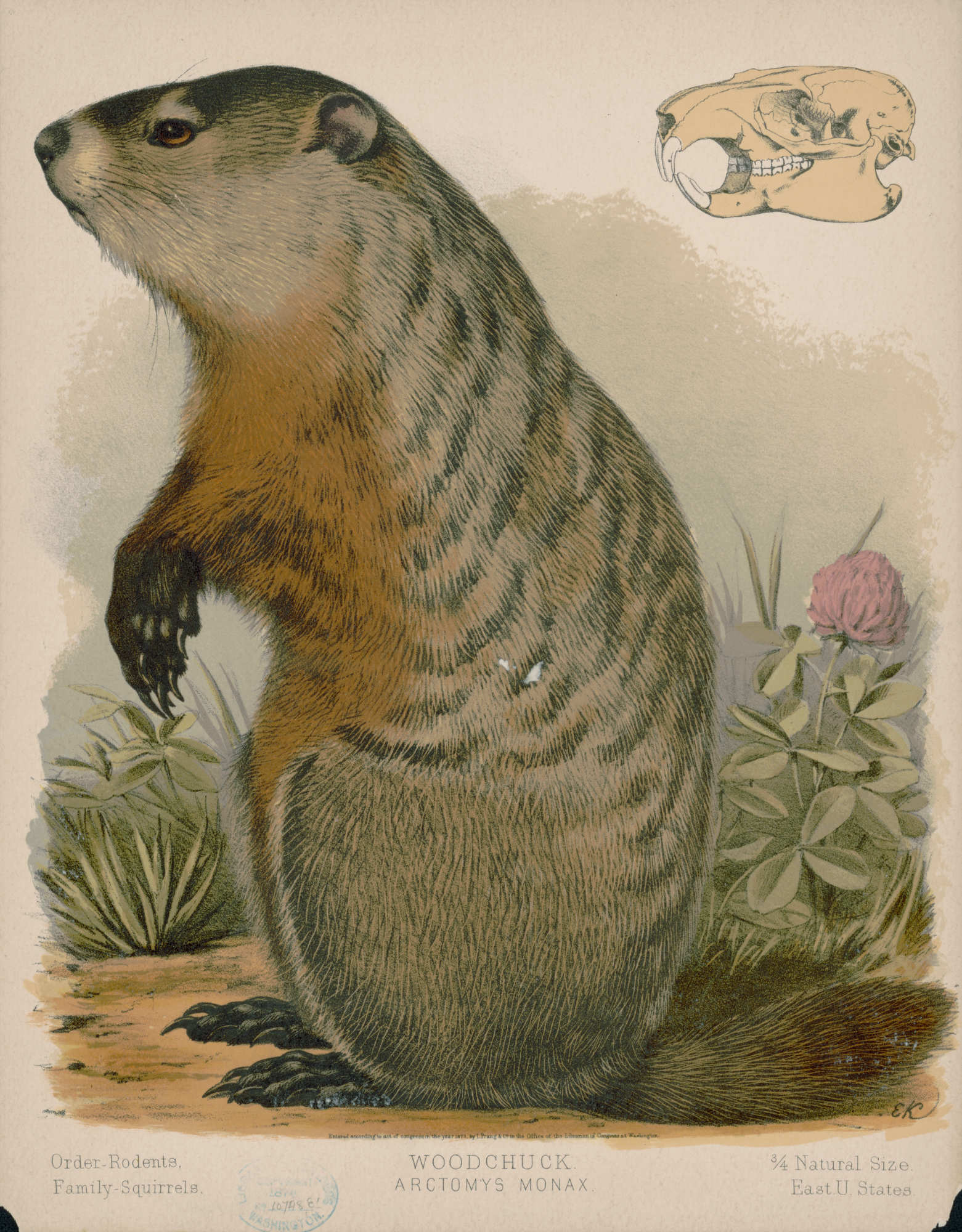
Illustration of a groundhog by L. Prang & Co., 1874
The first official Groundhog Day celebration was held in Punxsutawney, PA in 1887, when members of the local Elks Lodge traveled to Gobbler’s Knob to seek advice from a groundhog about the weather. Today, the Punxsutawney Groundhog Club maintains the tradition, which is as popular as ever thanks to the 1993 film Groundhog Day. Not surprisingly, groundhogs are not the best at foreseeing the weather. Phil, for all of the fanfare, has only been right about the coming of spring around 35% of the time. Still, his predictions are highly anticipated and reported upon internationally.
In our household, we look forward to Groundhog Day on February 2nd and get up early to watch the live stream of the event in Punxsutawney. Gathered by a screen, we always enjoy seeing a tuxedo-dressed man pull Phil from his stump, while another reads the results of the groundhog’s forecast. Yes, it’s fun to watch, especially for the children. However, it also serves as a reminder of our family’s Deitschy roots on the rural farms of Pennsylvania.