Andreas Hagenbuch’s Soldier Sons: Part 1
Over the past 40 years I have presented many programs to historical groups such as the Sons of the American Revolution (SAR) and Daughters of the American Revolution (DAR). In fact, I am a...

Hagenbuch family history & genealogy
Over the past 40 years I have presented many programs to historical groups such as the Sons of the American Revolution (SAR) and Daughters of the American Revolution (DAR). In fact, I am a...
In the summer of 1980, wife Linda, my nephew Tommy Huffman, and my niece Melanie Huffman traveled south from Pennsylvania to visit with my brother David Hagenbuch and his family in Georgia before we...
Jacob Hagenbuch died in 1842 at the Hagenbuch homestead in Albany Township, Berks County, Pennsylvania. He left no will, forcing a local judge to order that his entire estate be inventoried. The contents of...
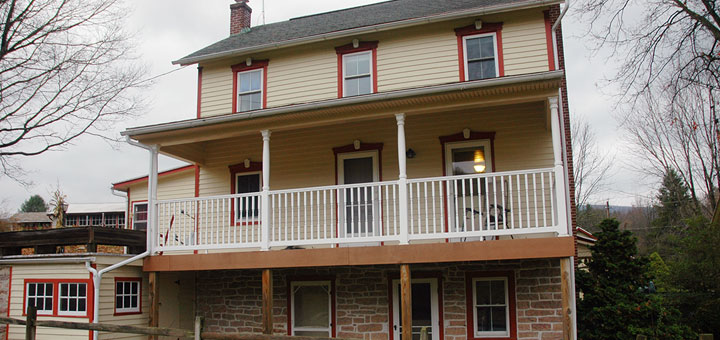
In 1741, Andreas Hagenbuch (b. 1711, d. 1785) acquired 150 acres of land in Albany Township, Berks County, Pennsylvania. For decades, it was assumed that the original homestead on the site was located close...
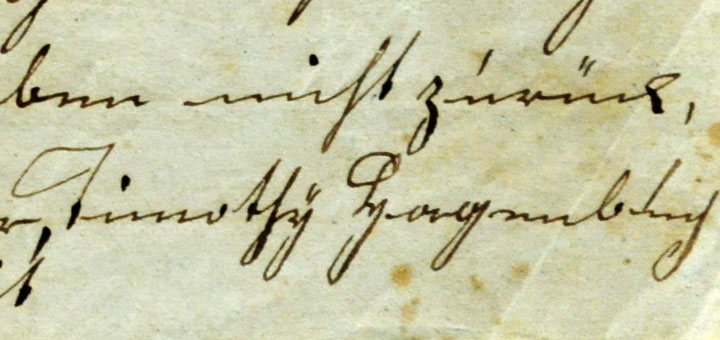
Timothy Hagenbuch’s 1851 letter to his brother, Enoch, is an important piece of history. Besides providing insights into family relationships, the letter reveals reasons why some Hagenbuchs picked up and headed west. When the...
It’s been two years since my father, Mark Hagenbuch, and I founded Hagenbuch.org. Since then, the site has amassed a collection of over 100 articles containing family stories, genealogy, and culture. Around this time...
In 1851, Timothy Hagenbuch wrote a letter to his brother, Enoch. The story of how this letter came to be discovered was discussed in the first part in this series. Future articles will explore...
In part one of this series, three theories for the possible location of Andreas Hagenbuch’s house were proposed. In the second and final installment, the third and most likely theory will be explored in...
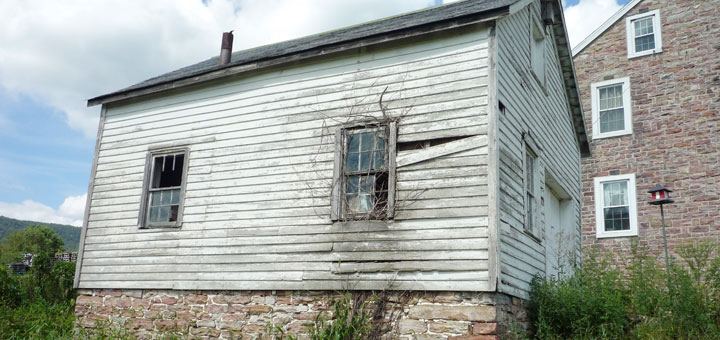
Does Andreas Hagenbuch’s house still exist? In short, probably not. Unfortunately, it is rare today to find frontier log homes from the 1700s standing. Unlike stone, which is a much more durable building material,...
It’s doubtful Michael Hagenbuch (b. 1746, d. 1809) could ever have imagined how much his descendants 200 years in the future would appreciate him neglecting to make a will. Nevertheless, it is as a...