
If These Walls Could Talk

If these walls could talk, what stories would they tell?
This question keeps running through my mind as I decorate the house that my wife, Sara, and I bought a few months ago. The lights have been strung, the stockings hung, and the tree trimmed with ornaments. This isn’t the first time I have asked such a question either. Houses, like historic documents, can tell stories about the people who once lived there.
My family and I live in Yardley, Pennsylvania—a small town right along the Delaware River. Our home is over a century old and was built around 1910. We estimate that since it was finished about five families have lived in it, and this may be the 115th Christmas celebrated here. I keep wondering: Who laughed, sang, and exchanged gifts in the living room? What did they eat and drink in the dining room? How did they choose to observe the holidays together in this home?
According to neighborhood lore, our house was part of a housing tract of five homes that were built for the men who supervised the construction of a nearby railroad bridge spanning the Delaware River. That bridge was begun in 1911 and finished in 1913. The homes were built in the Craftsman style, which has been popularized by furniture designer Gustav Stickley (b. 1858). His magazine, The Craftsman, heavily influenced American architecture in the early 20th century.
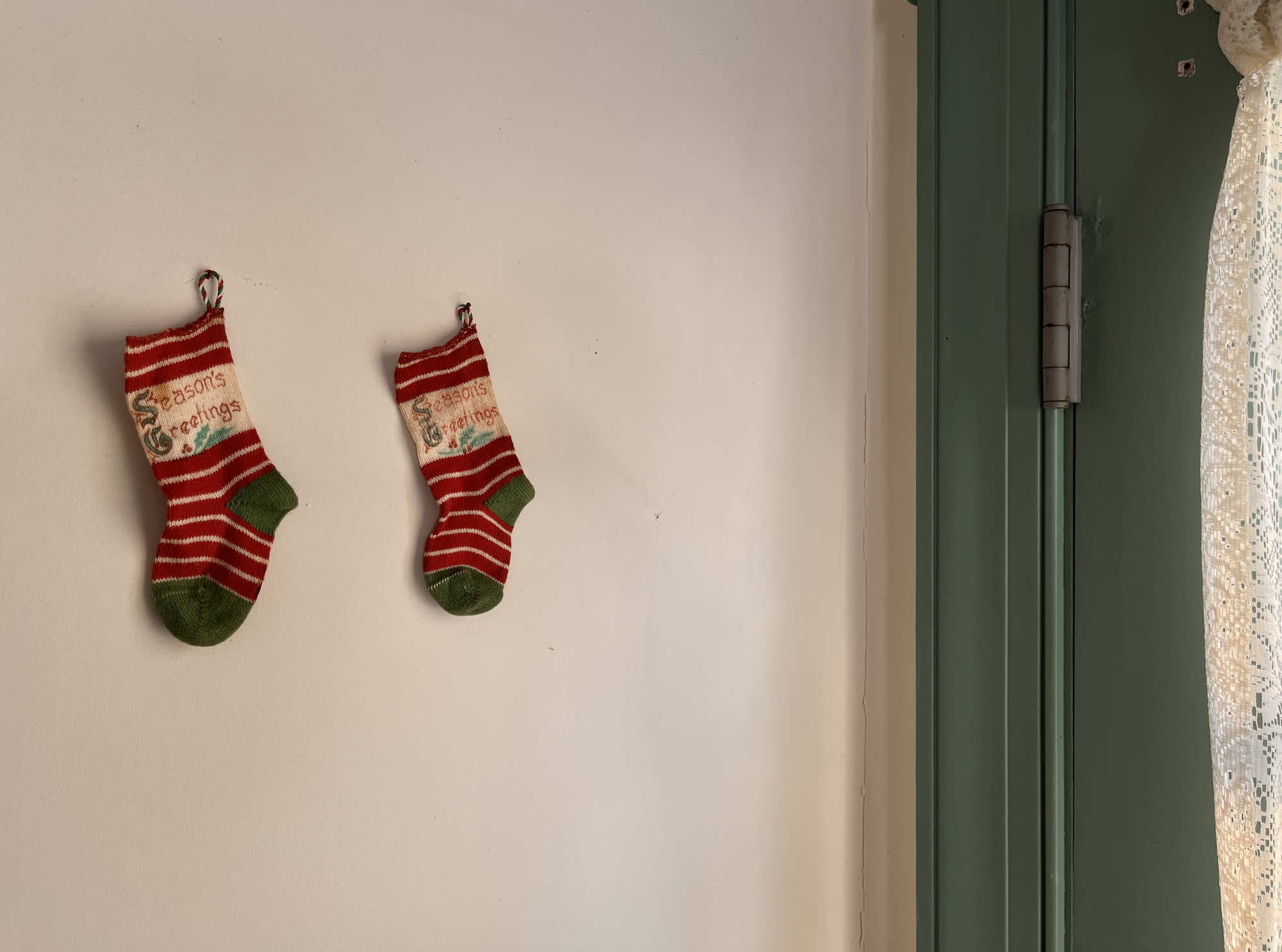
Two vintage Christmas stockings hanging near a door
The five homes also appear to have been prefabricated home kits. There were a number of home kit manufacturers to choose from in 1910 including Sears, Aladdin Homes, and Bennett Homes. It’s unclear what company or kit was used to build our home. However, it used quality materials like red oak and brick. All of the pieces used in the construction were shipped to Yardley in railroad cars. Labor and a foundation for the structure were required. Since there was plenty of concrete used to build the bridge, thick concrete basement walls were poured for each of the homes.
We don’t know the first owner of the house—yet. We assume it was a supervisor on the railroad bridge project. Future research into the property’s historic deeds will almost certainly reveal that person’s name. In the meantime, newspaper archives show that by the mid 1950s, the home was owned by Russell Caffey Overholt, Jr. (b. 1926), who lived with his wife, Mary, and son, David. Russell worked as a lineman for the electric company. Later, he started his own electrician business. Looking at the basement, I can see the remnants of the knob and tube wiring that once powered the house. Did Russell maintain or begin to replace some of this while he lived here?
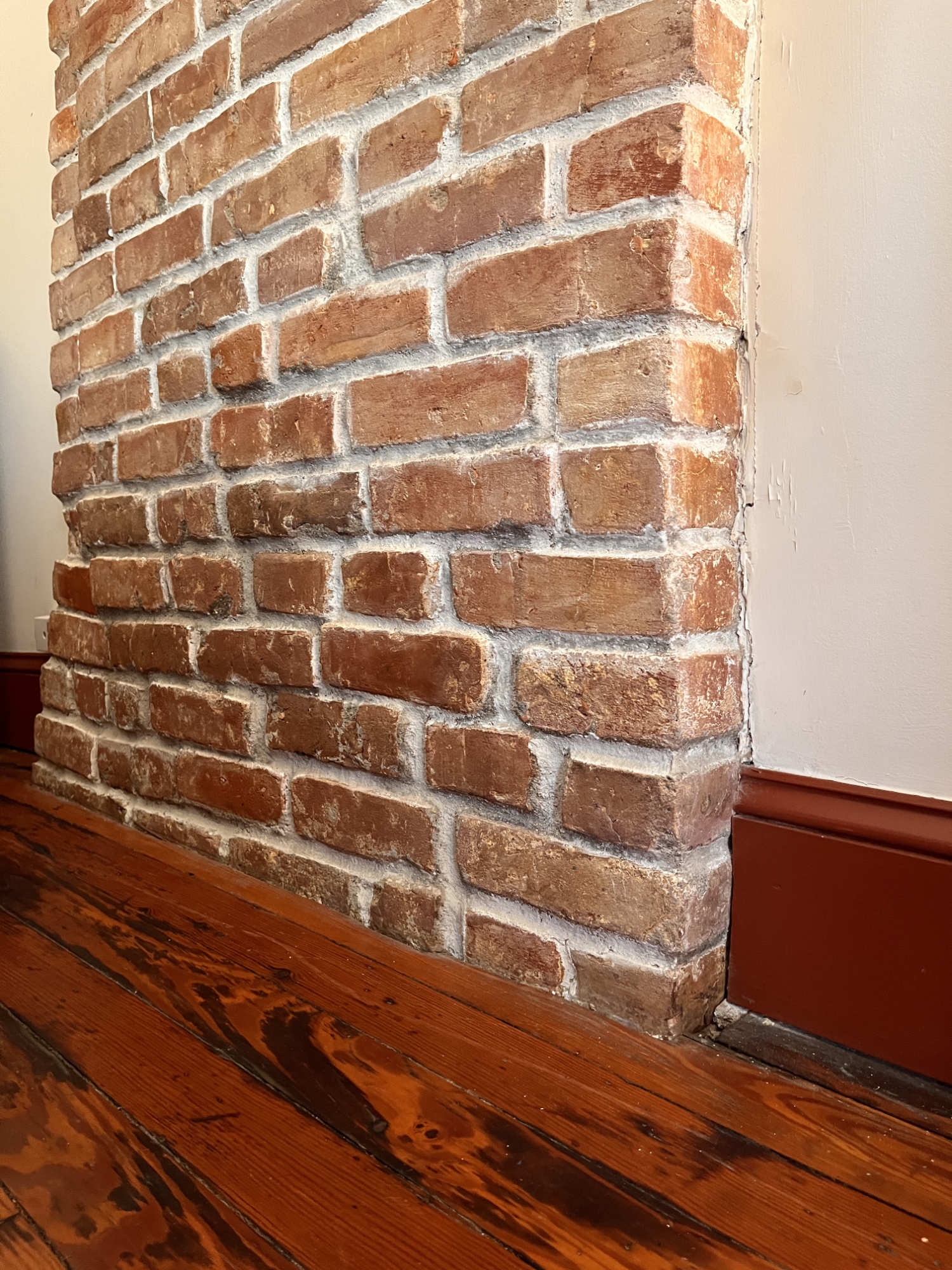
Original floor and brick from the chimney
The next owner of the home was James Robert Rudloff (b. 1937) and his wife, Patricia Anne (Walsh) Rudloff (b. 1939). They lived here together with their five children. James worked for the nearby U.S. Steel mill. One can imagine that their days were full of energy and excitement, having five children running up and down the stairs as well as around the yard!
In 1976, Thomas “Tom” S. Simonet bought the home from the Rudloffs. It is very likely that Tom occupied the house for longer than any previous owner—nearly 50 years—until we bought it from him. Tom is our friend and we’ve had the pleasure of learning about some of the home’s history from him.
After acquiring the property, Tom took an aging, flood-damaged structure and breathed new life into it. He had the plastered walls opened and mud from the 1955 flood removed. With the bare studs visible, old knob and tube wiring was replaced with new, sheathed wires. Galvanized steel pipes were cut out and copper pipes installed. When the walls were closed, they were covered with drywall and new trim was added. (We did find one place on the third floor where the original trim is still visible.) Many of the wood floors were refinished, while a few were covered in carpet.
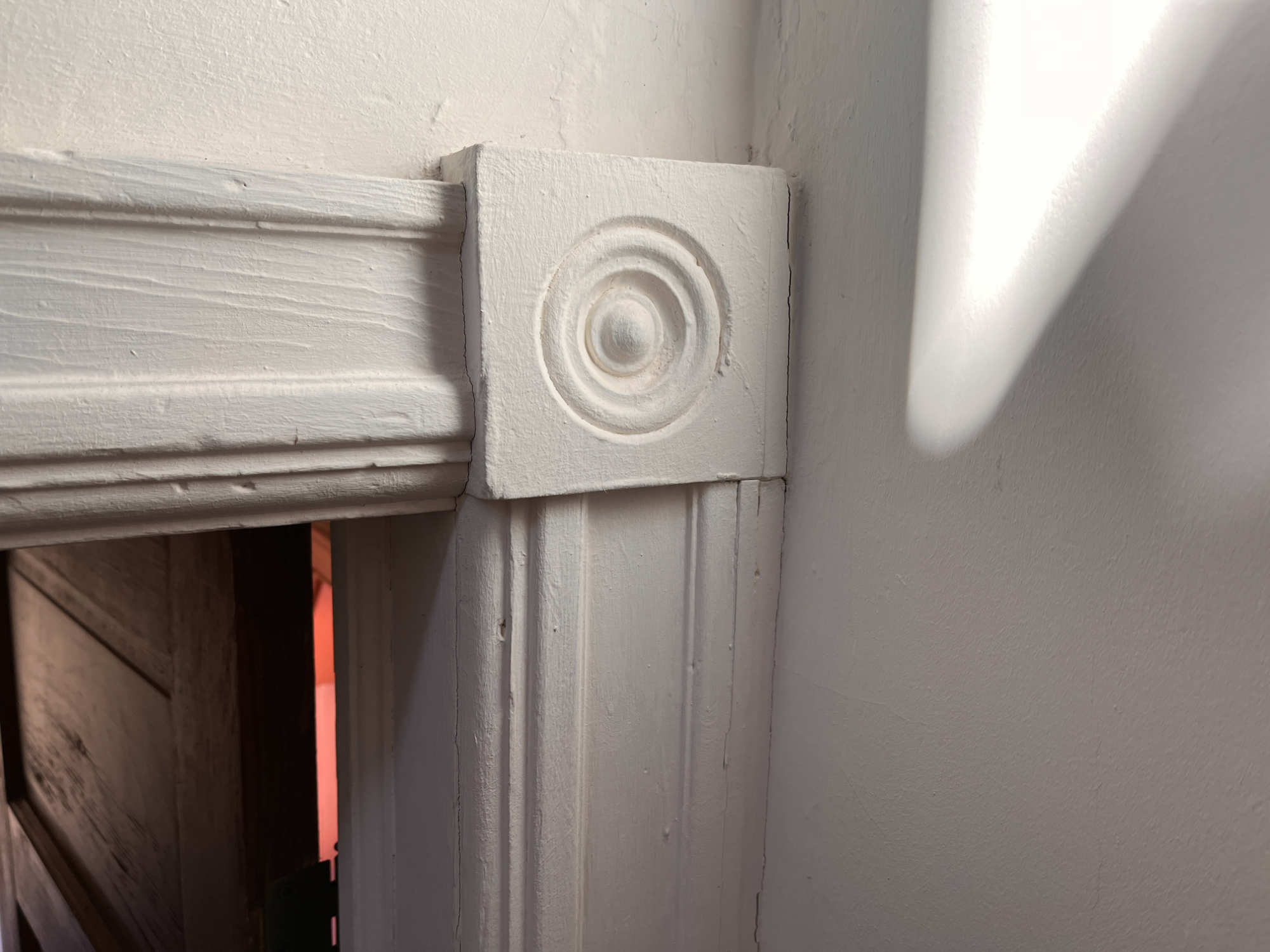
Original trim found on the third floor doorway
Tom reconfigured and expanded the house. Downstairs, a new family room was constructed to provide more space, a wood stove, high ceiling, and skylight. He named it the “Sky Room” after the Sky Room Restaurant on the 12th floor of Dayton’s department store in Minneapolis—the city where he grew up. Upstairs, walls were moved, closets framed out, and rooms reconfigured. The attic was turned into a master bedroom by adding several dormers.
Other aspects of the home were changed too. The oil furnace, which had originally been a coal furnace, was converted to natural gas. New chimneys were built for wood-burning stoves. Finally, Tom placed solar panels on the roof and a car charger by the driveway for an electric vehicle. Although many families have lived in the house, his years of ownership have left an outsized mark upon the property. It’s no wonder that our children still refer to the home as “Tom’s house.”
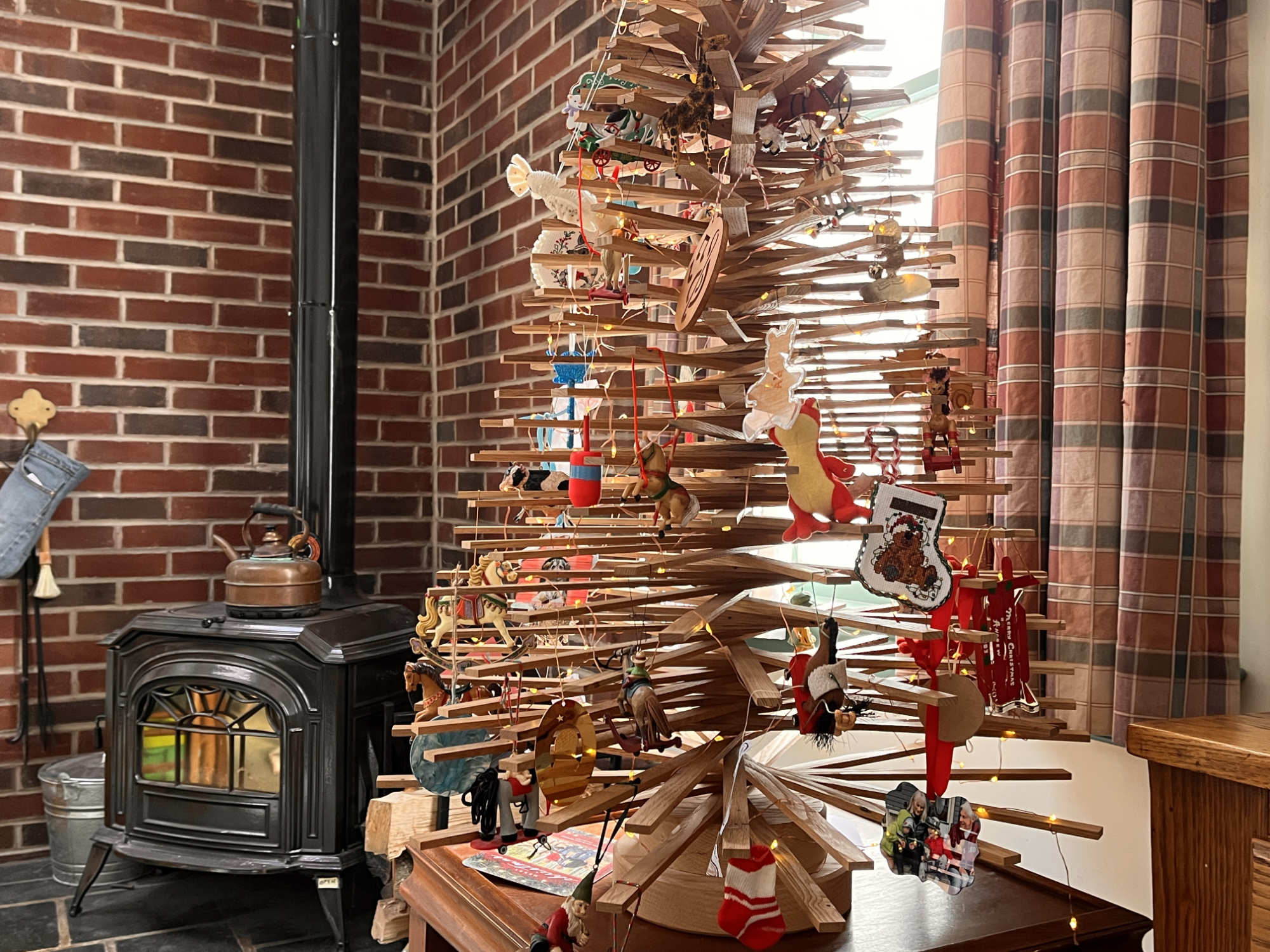
Ornaments decorating a wooden Christmas tree in the Sky Room
One of the nice things about being friends with the home’s previous owner is that he can tell us stories about it. For instance, we know which bedroom each of his three children slept in. So, when we found a broken baby tooth in one of the bedrooms, we knew which of Tom’s daughters had lost it!
Walking through the house now, I can imagine over a century of holiday celebrations in the living and dining rooms. What joys must have been experienced there by friends, family, and loved ones. As I look into the bedrooms, I picture Overholt, Rudloff, and Simonet children nestled in their beds, eagerly awaiting Christmas morning. Standing on the staircase, I can see them rushing into the living room to see their gifts under the tree.
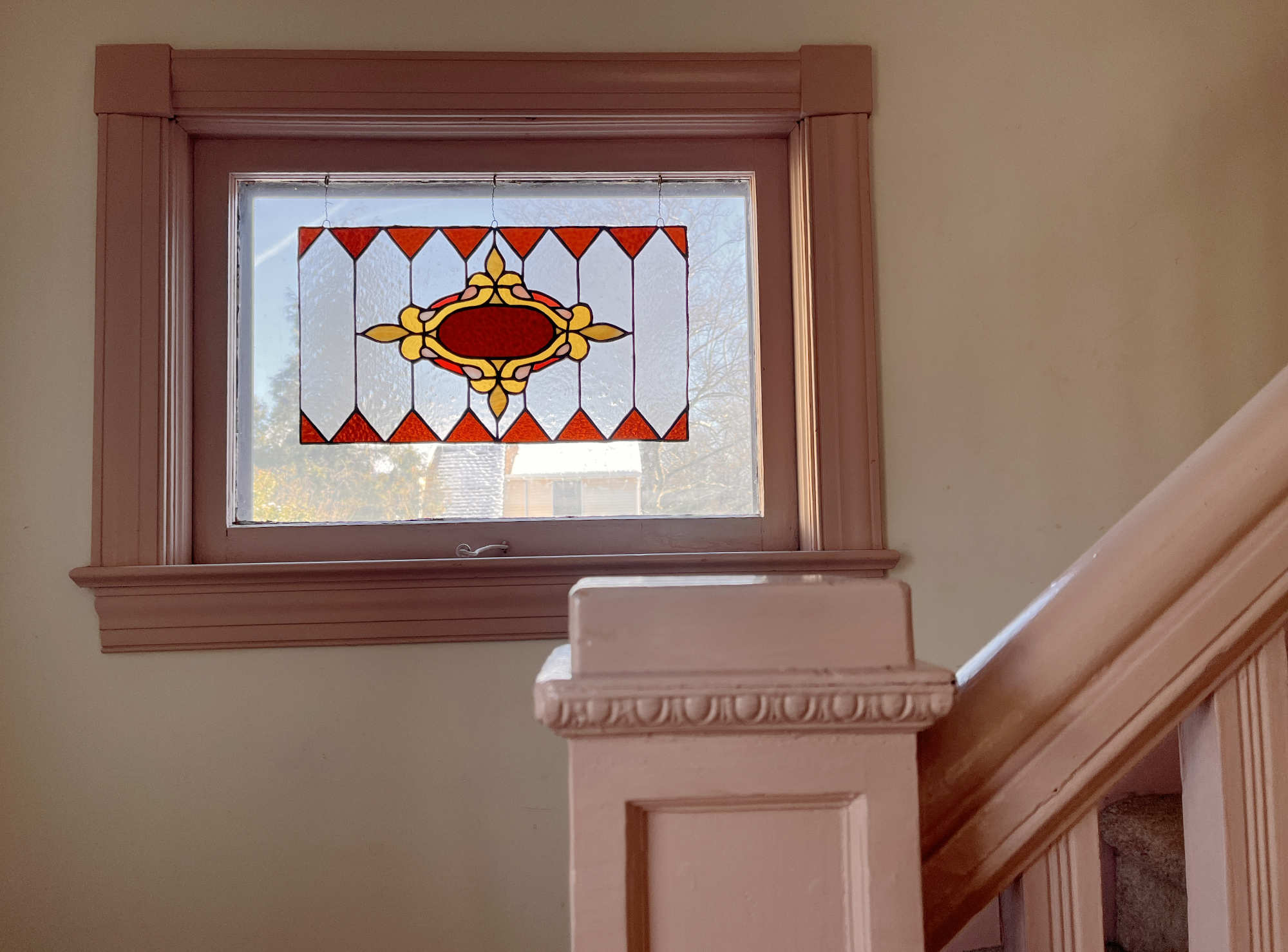
Staircase post and banister with stained glass hanging in the window at the landing
The story of this house is still being written. Those children who lived here before will now be joined by a new generation of three, young Hagenbuchs: William, Henry, and Rosanna. This year, their shouts of glee will echo from the walls, writing the next chapter in the home’s history.
Merry Christmas from our Hagenbuch family to yours,
—Andrew M. Hagenbuch








Merry Christmas and Happy New Year! 🎊